

A Vanishing Landscape of Diverse Meadows
Over the past decades, traditional flower-rich grasslands in the Czech landscape have significantly declined due to intensive agriculture, encroachment on unmanaged areas, and landscape homogenization. Along with them, a diverse range of plants, insects, and other organisms for which meadows constitute a crucial habitat is disappearing.
The restoration of these habitats is therefore becoming an important topic in nature conservation and landscape planning. One of the primary tools for restoration is the establishment of new vegetation and the overseeding of suitable species using seed mixtures. However, for restored meadows to fulfil their ecological functions and thrive in the long term, it is essential to pay close attention to the quality and origin of the seed used.
The project ” Genetic variability of grassland species and regional seed mixtures” was established in response to this need. It provides the scientific foundation for the effective and sustainable restoration of meadow habitats in the Czech landscape.

Respecting Genetic Structure: The Key to Safe Seed Transfer and Successful Ecological Restoration
Just as crop plants have their regional varieties, wild meadow species also form populations adapted to local conditions. These differences can manifest in growth, phenology, and interactions with insects. Research shows that many populations thrive best precisely in their home region, confirming their long-term adaptation to the local climate, soils, and ecological networks.
When restoring meadows, the choice of appropriate species is therefore not the only critical factor—the origin of the seed used is equally vital. If genotypes from other regions are introduced into the landscape, they may exhibit lower vitality and simultaneously threaten local populations through hybridization, leading to the loss of their specific adaptations. For these reasons, the use of regional seed has become a standard in ecological restoration in some countries. In Germany, for instance, the use of regional seed has become the standard and is required by law. This obligation applies to ecological restoration projects, landscape engineering, linear infrastructure (such as highway slopes), and the establishment of biocentres. Both the agricultural and forestry sectors are exempt from this requirement.
Local Adaptation
Populations thrive best under the conditions of their home region — including climate, soil, and ecological interactions.Risk of Contamination
Foreign genotypes can weaken the specific adaptations of local populations through hybridization.Regional Seed
It is the standard for ecological restoration in Germany and is legally required.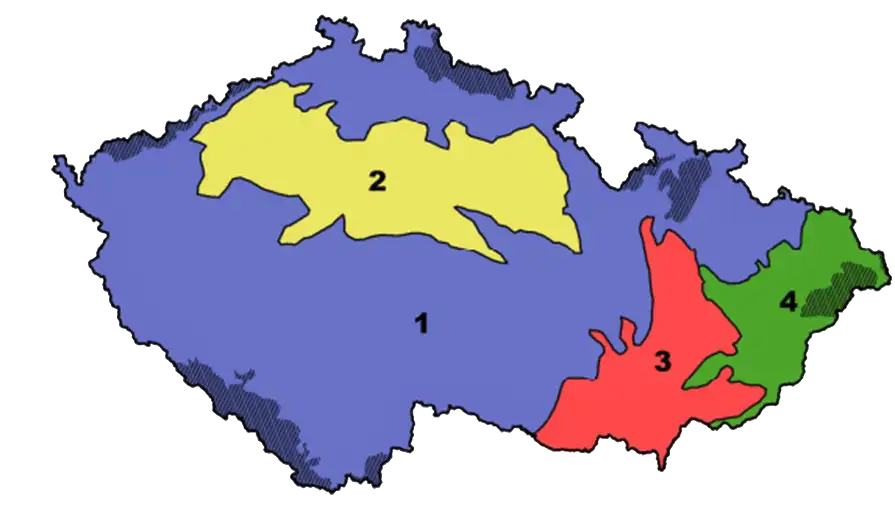
Landscape Context, Framework and Practical Limits in the Czech Republic
In the Czech Republic, the landscape is divided into four source regions according to a map created by the Nature Conservation Agency of the Czech Republic (AOPK ČR) (AOPK ČR Standard SPPK D02 001: 2017). Compliance with this standard is voluntary and is only mandatory if the project is publicly funded.
However, this classification may not always accurately reflect the actual genetic structure of individual species. This is precisely why more detailed genetic data is required to better align restoration practices with biological reality. Although local initiatives focused on producing regional mixtures already exist (e.g., White Carpathians, Šumava, Krkonoše, Vysočina), a unified, scientifically substantiated foundation for nationwide practice is currently lacking.
Regional Seed Mixtures
Our methodology integrates extensive field research with modern genomic and population genetic analyses. As a result, it provides detailed and spatially accurate information on the genetic structure of selected grassland species.
What does this mean in practice?
- Precise regional delineation: It allows for a better definition of seed origin regions, ensuring they align with the actual biological variability of the plants.
- Safe seed transfer: It clearly indicates when seed can be safely transferred between regions and when, conversely, it is necessary to utilize strictly local, regional sources.
- Ecological stability: It provides a robust foundation for creating regional seed mixtures that ensure the long-term functionality and stable ecological restoration of meadows.